


There's a building tension. I can see the chilled vapour emanating from my competitors as they do the "starting line" shuffle on the beginning point.
A swift flick of the hips.
I'm at my local weekly parkrun event and I'm focused. The countdown begins...
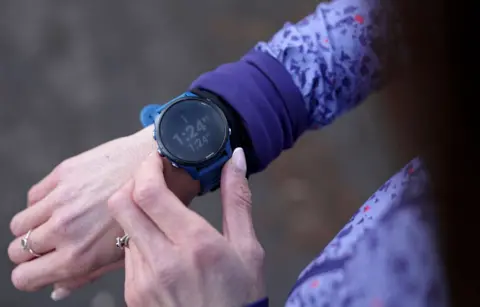
Hold on. I need to adjust my tracker. The same goes for the guy next to me.
The person behind us expresses impatience. I refuse to go until… there! GPS ready, away I go.
During the scramble, it's difficult to spot a wrist without a fitness tracker on it. And this extends beyond us runners who wear them.
We're witnessing a explosive, multi-billion pound sector. Names like Samsung Galaxy are prevalent, featuring an broad selection of diverse models to suit a variety of lifestyles. Based on how advanced the device you go for, price tags can vary between a hundred pounds to thousands of pounds.
"I find it infuriating, I can't relax."
"It comforts me… It acts as a supporter supporting me."
"Please don't notify me I've had a bad night's sleep."
A small sample of the reactions I've received from like-minded tracker enthusiasts when I ask what they their opinion is on theirs.
The Data Dilemma
My thoughts on my own device? Right now, frustrating. It's indicating my speed is wrong, causing me to question whether the overhead branches along my route are blocking my GPS connection.
Countless individuals of us strap these small monitors onto our wrists and wear them all day and night, ostensibly unconcerned with the fact they're perpetually tracking us.
A distant memory are the days when we relied on them only to give us an estimation of our daily steps. Now, they can analyse our sleep quality, heart rate, oxygen saturation, our body battery.
It's tricky to find a bodily function they don't track.
But do they do what they claim to do? And are the statistics we analyse a faithful picture of the truth? Do they improve our daily wellness, or do the multitude of readings and constant notifications just contribute to our daily stresses?

A Love-Hate Relationship
"I find myself getting a a little fixated with mine," one user admits.
While she appreciates how her device tracks her workouts, she finds some of its other features "excessive" at times - a feeling that became apparent during a pregnancy.
Prior to discovering she could change its configuration, her smartwatch repeatedly informed her she was not being active enough. In a new phase, the watch keeps telling her she's had a poor sleep score.
"I am caring for a six-month old, it's unnecessary for me to be informed I've not slept," she says. "I'm acutely aware all too clearly."
Is it not possible to just take it off?
"It's possible, perhaps, but I have this complicated dynamic with it," she says. "I value it for its exercise data, but I'm unsure whether all the other things it can now do is maybe excessive for me."
The Technology Behind the Tracking
Every device of smartwatch has its own unique way of tracking your bodily functions and analysing your data, but the vast bulk use detectors on the back of the watch.
They typically project minute LED lights onto your skin which can observe blood flow, identifying your BPM. Sophisticated devices analyse changes in the electrical current that passes over the skin to gauge your recovery state.
Expert Perspectives
One expert says that overall for smartwatches, it's a "difficult line" - while the rapidly advancing tech could actually prevent illness, "spotting abnormalities before we feel unwell", it could also turn us watch wearers into the "anxious healthy".
He points out that the most advanced wearables can perform tests like heart rhythm analysis, which continuously monitor how stable the heart is. They can alert if someone is experiencing an irregular rhythm, where there is irregular signals in the heart causing an uneven pulse.
This does not mean someone is on the verge of a cardiac event, but it can give an advance notice they might be more vulnerable of a stroke in the long term.
But how to make sense of these readings is complex. The expert fears that as additional features are incorporated, people may struggle to fully comprehend their data.
"I have some doubts that the ability to monitor so many metrics is such a beneficial thing," he says.
A professor focusing on wearable tech echoes this sentiment. Research into the influence of wearable tech on a specific group of individuals with health issues suggested a minority of those who were given devices to monitor their heart health experienced greater stress and were "more inclined to use healthcare resources".
She observed a vicious circle with her patients - they noticed a worrying figure on their watch. They felt anxious. Their pulse increased. They got more worried. They checked again, and their heart rate rose further.
"If we see numbers about ourselves that we don't really understand then, naturally, we are going to become concerned," the psychologist says. "We look, we check again - it becomes a feedback loop."

